%20(2)_edited_edited_edited.png)
Pedometer Accuracy: What’s Actually Reliable (and What’s Not) for Step Tracking After 40
- Emma Mattison
- Feb 25
- 5 min read
If you’ve ever compared your step count between a phone, a watch, and a clip-on pedometer…and thought, “Okay, someone is lying,” you’re not imagining things.
Pedometers (and wearables with pedometer features) are widely used, but step-count accuracy can vary drastically depending on the technology inside the device and where you wear it.
And yes—we’re going to talk about the big names: Apple Watch, Fitbit, Garmin. But first, you need to understand why two devices can give you two completely different numbers while you’re doing the exact same walk.
Pedometer Accuracy Starts With the Technology Inside the Device
There are three main types of step-counting technology you’ll see in real life:
Spring-lever pedometers (mechanical)
These are the classic clip-on units that often sit on the waist or in a pocket. They use a spring mechanism that physically triggers with movement.
They’re typically:
Affordable
Best worn on the waistline (hip motion is the magic)
More likely to miss steps when walking slowly (more on that below)
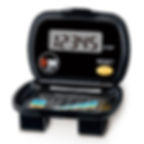
Examples:

Research on slow-walking older adults has shown step-count accuracy drops as walking speed/cadence gets slower, which is exactly why many devices struggle for some adults 40+—especially in early rehab, pain flare-ups, or simply a naturally slower gait.
Piezoelectric pedometers (pressure/crystal-based)
“Piezo” relates to pressure. These pedometers use a sensor/crystal that detects motion in multiple directions, and they tend to hold accuracy better across more speeds and positions than spring-lever devices (especially at normal/brisk speeds).

Example:
Accelerometer-based wearables (wrist trackers)
These are your Apple Watch / Garmin / Fitbit type devices. They track acceleration across multiple axes (up/down, front/back, side-to-side). They’re convenient and often track more than steps (heart rate, workouts, sleep, etc.).
But here’s the truth nobody wants to hear:
Wrist-based wearables can be “too sensitive” in daily life—because your arms move even when you aren’t stepping.
This is especially relevant if you:
talk with your hands (hi, me)
carry bags
fold laundry
serve tables
drum, play guitar, or do anything rhythmic with your upper body
That arm movement can inflate your step count—particularly in “free-living” conditions (real life, not a treadmill).
What the Research Shows About Step Counter Accuracy (Treadmill vs Real Life)
Let’s talk about what research actually tells us—because this is where people get misled.
Apple Watch step count accuracy (treadmill)
A treadmill study testing Apple Watch step tracking across different speeds found small errors at walking speeds and an undercount at jogging pace.
Key point: treadmill testing is controlled (steady pace, fewer unpredictable arm movements), which can make wrist devices look better than they perform in everyday life.
Sportline pedometer accuracy (treadmill)
In a treadmill-based validation study, Sportline was the only pedometer brand that was statistically similar to actual steps at a brisk walking pace in a small sample of college students.
Again—controlled environment, consistent gait, consistent pace.
Still, it’s a strong nod that a simple waist-worn pedometer can hold its own when the conditions are steady.
Garmin vívofit accuracy (free-living conditions)
Free-living research (real-world living) is where wrist-worn devices often show bigger bias—because daily arm movement becomes part of the measurement environment, not a “noise factor” removed by treadmill testing.
One free-living validation paper on Garmin vívofit (and another tracker) is a useful reference point for how real-life conditions affect step counts.
(Translation: if your hands are busy, your step count might be too.)
Waist vs Wrist Pedometer Accuracy (Placement Matters More Than People Realize)
Here’s the simplest truth:
Waist-mounted devices generally capture steps more accurately than wrist-based wearables because they follow the hips’ up-and-down motion during walking.
Wrist devices measure wrist movement. And your wrist moves a lot—whether your feet do or not.
For slower walkers (common after 40, and especially in older adults)
If you walk slowly, some research suggests pedometers can become less accurate as gait speed drops.
In these cases, some people do better with:
A well-placed waist pedometer, or
An ankle placement (depending on device design and gait pattern)
The goal is always the same: a consistent, repeatable measure that reflects your actual movement.
The “Gold Standard” Step-Tracking Mindset (It’s Not Flashy, It’s Consistent)
If you want the most accurate step count possible, especially if you’re using it for:
rehab
weight management with a step goal
monitoring a medical condition
improving daily activity with precision
…then the boring options often win.
Why YAMAX gets so much respect
Some YAMAX models require you to manually set the stride length, which improves distance estimates compared to devices that guess the stride length automatically.
Yes, it takes a minute. Yes, that’s exactly why most people won’t do it. And yes…that’s also why it tends to be more accurate.
Which Step Counter Should You Choose? (My Practical Recommendations)
Let’s make this easy. Choose based on what you actually need.
If you want the most accurate step count for walking
Go waist-mounted:
If you want an “all-in-one” wearable, and steps are just one metric
Wrist-based can still be useful—just understand the limitations:
My rule: If you use the same device consistently, it can still be a helpful tool for trends—even if the absolute number isn’t perfect.
If you use your hands a lot (musicians, caregivers, service industry, coaches)
Be cautious with wrist-based step counts. If you need accuracy, choose a waist pedometer.
Because if your watch says you got 10,000 steps while you played guitar for an hour…that’s not cardio. That’s marketing.
The Bottom Line on Pedometer Accuracy After 40
Technology matters (spring-lever vs piezoelectric vs accelerometer).
Placement matters (waist usually beats wrist for steps).
Testing conditions matter (treadmill accuracy can look better than real life).
If you’re walking slower, some devices may miss steps—so choose accordingly.
If you just want a general activity trend, consistency beats perfection.
Always remember: your health is an investment, not an expense.
Product Link Disclosure
Some links above are affiliate links, which means I may earn a small commission at no extra cost to you. I only share tools I genuinely believe can help.
About the Author

Emma Mattison is the founder of Emma Mattison Fitness, where she helps adults 40+ build functional strength, improve mobility, and create sustainable habits through science-backed training and holistic health coaching. She’s known for cutting through fitness marketing noise with practical, evidence-based guidance that works in real life.
References
Martin JB, Krc KM, Mitchell EA, et al. Pedometer accuracy in slow-walking older adults. (2012).
Husted HM. The Accuracy of Pedometers in Measuring Walking Steps on a Treadmill in College Students. (2017).
Veerabhadrappa P, Moran MD, Renninger M, et al. Tracking Steps on Apple Watch at Different Walking Speeds. (2018).
Šimůnek A, Chmelík F, Frömel K, et al. Validity of Garmin Vívofit and Polar Loop for measuring daily step counts in free-living conditions in adults. (2016).