
Muse Headband Review: The EEG Meditation Device That Shows Your Brainwaves in Real Time
Meditation is supposed to be simple. So why does it feel like so many people are just sitting there thinking about groceries?
One reason is that meditation can be frustratingly hard to measure. EEG technology has traditionally lived in clinics and research labs, not in everyday life.
The Muse headband changes that by bringing a mobile EEG-style experience into the real world—pairing brainwave tracking with guided and biofeedback-based meditations so you can stop guessing and actually learn what “calm” feels like in your body.
And if sleep is part of your goal, Muse can also help you understand what your brain is doing overnight—because recovery isn’t just about how long you slept, it’s about the quality of that sleep too.

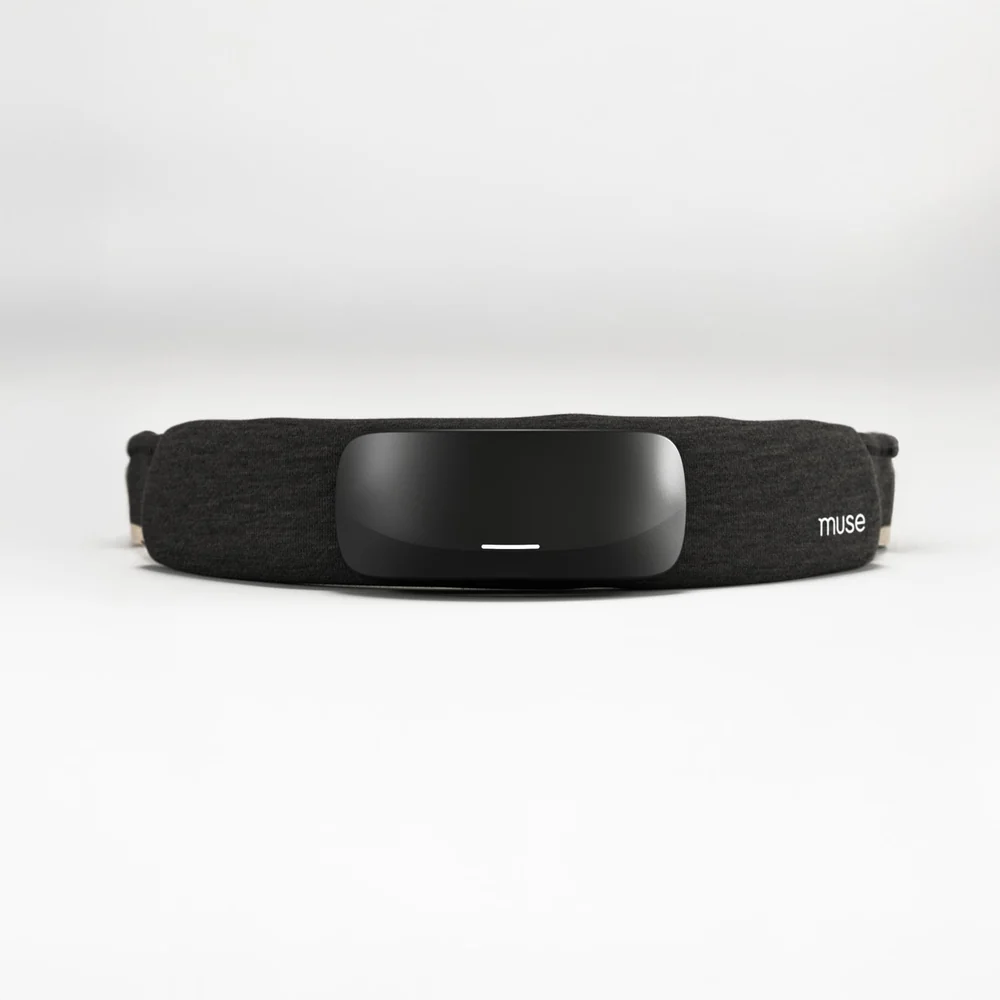
I’m talking specifically about Muse 2 and Muse S—two mobile EEG devices that can fundamentally change how you approach meditation (and, with the sleep model, how you understand what’s happening in your brain overnight).
Let me keep this simple: Muse makes EEG-style brainwave feedback accessible to everyday people. That still blows my mind.
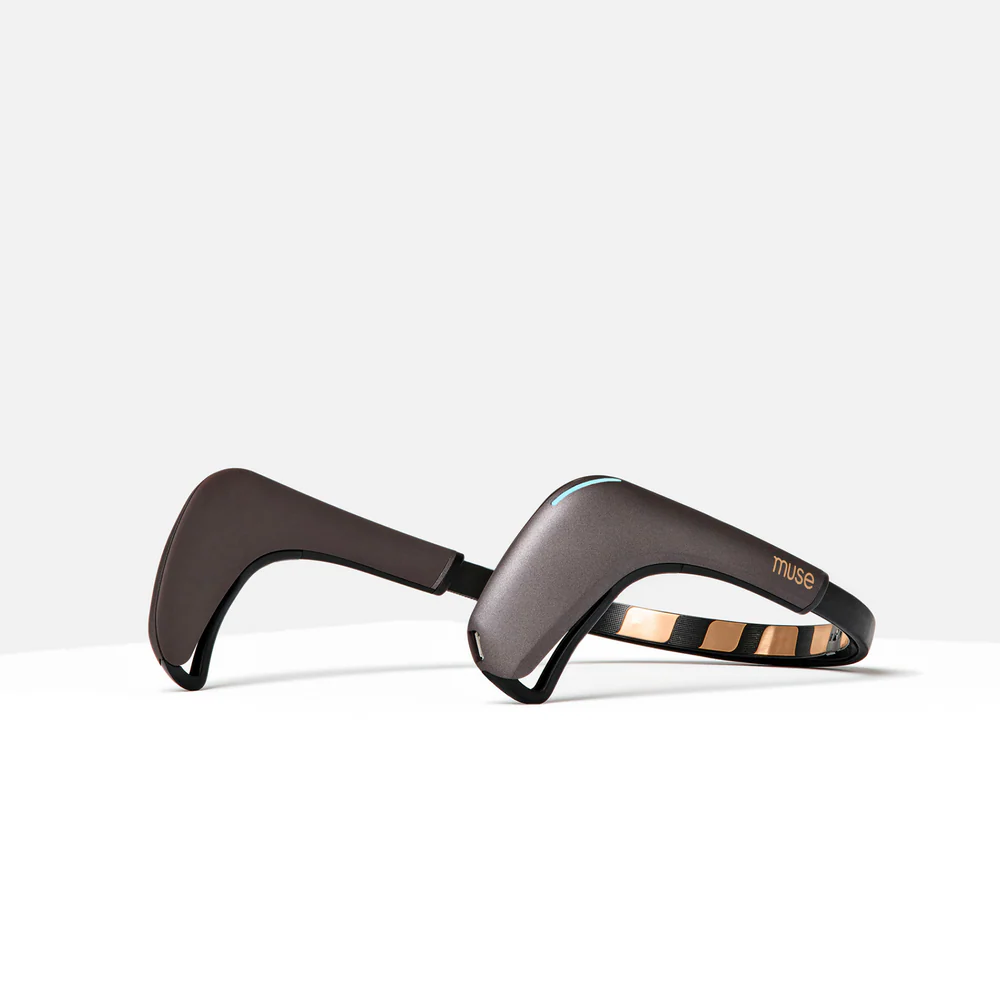

Traditionally, EEG (electroencephalography) has been largely confined to clinical or lab settings. Muse takes the concept of brainwave measurement and puts it into a consumer device that you can use at home, on your schedule.
What makes Muse different: mobile EEG and real-time feedback
Muse headbands I reviewed use sensors that measure brain activity and translate it into feedback you can understand—while you’re doing the practice.
With Muse, you can:
See your brain activity trends during meditation sessions
get audio feedback that changes as your mind settles or wanders
track sessions over time so meditation becomes less “vibes-only” and more measurable
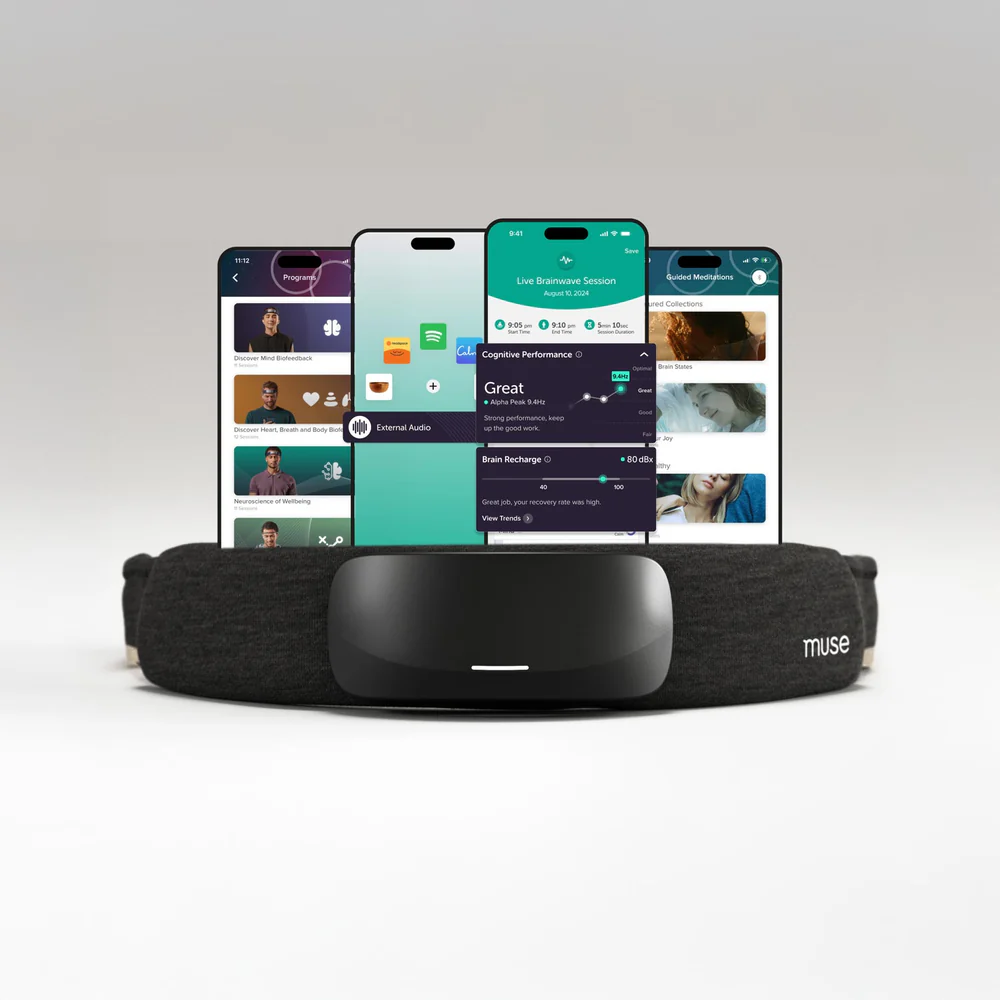
Muse literally translates your mental activity into weather-like sounds (calmer when you’re steady, stormier when you’re distracted). That’s a core feature of the Muse app experience.
Muse headband Review, how to wear them correctly
Here’s the quick setup:
Make sure the sensor contact points are placed correctly.
The headband needs proper contact at the forehead and (depending on the model) the areas it’s designed to read from.
Hair pulled back is ideal for better sensor contact (even though I don’t always do it perfectly in real life).
Once it’s on, you connect to the Muse app, and you can also connect to partner apps that integrate with Muse.
Why I like Muse: it makes meditation “click” for people
A lot of people think they’re meditating well because they can sit still, breathe, and visualize.
I did too.
Then I tried Muse—and it exposed all the plot holes.
What Muse does best is help you answer:
“Am I actually calm right now?”
“Did my mind just run off into groceries and to-do lists?”
“Can I bring myself back without guessing?”
That kind of feedback is powerful for people who struggle with meditation because it finally gives their brain something concrete to respond to.
And yes—sometimes that means you realize you’re not as “zen” as you assumed. That’s not a failure. That’s the whole point of feedback.
Nervous system balance: why this matters beyond meditation
If you can reliably practice shifting into a calmer state, you’re training your ability to regulate stress throughout the day.
I’m not here to pretend you should be relaxed 24/7. You shouldn’t.
You need a healthy balance between:
the sympathetic side (activation, stress response, excitement)
the parasympathetic side (rest, recovery, “downshift”)
Muse can help people practice the downshift intentionally—especially those who don’t realize how often they’re running “revved up.”
Muse for sleep: why EEG-style sleep data is a big deal
This is where things get especially interesting.
Muse S models are designed to track sleep stages and provide sleep insights using EEG alongside other sensors.
Why do I care?
Because the “deep sleep” conversation isn’t just about how long you slept—it’s about whether your brain is actually getting into the deeper stages that involve slow-wave / delta activity.
If you want a foundational understanding of why brainwaves matter for sleep stages, I recommend learning the basics of sleep staging (including what delta activity represents in deeper sleep).
I have videos on my Emma Mattison Fitness YouTube channel that dive deep into sleep! No pun intended.
Real talk: Muse is not for everyone
I recommend Muse to many of my clients—but not all.
Some people can become more anxious with biofeedback devices because they start obsessing over “doing it right.”
Here’s the truth:
You are not always supposed to hear birds.
Your mind is not supposed to be calm 100% of the time.
A wandering mind is part of being human.
The skill is noticing it and returning—not achieving perfection.
If you tend to fixate, spiral, or get overly anxious about metrics, you may do better with a gentler approach and/or a different type of app-guided experience.
The science angle: neurofeedback-style meditation is being studied
This isn’t just “tech wellness hype.” There is research exploring mindfulness meditation combined with neurofeedback and how it may support mental health outcomes and training effects.
Does that mean a consumer device replaces clinical care? No.
But it does mean the concept of feedback-assisted meditation is legitimate enough to be studied seriously—and that matters.
My recommendation
If you want a device that:
gives you real-time feedback during meditation
helps you learn what “calm” feels like in your body
makes meditation more engaging and measurable
…Muse is worth considering.
It is an investment. But in my opinion, it’s one of the few “wellness tech” purchases that actually has a clear training purpose and a learning curve that can pay off.
Get 15% off Muse
Use code EMMAMATTISON at checkout for 15% off.
Purchase link: Muse Headband Options
References
Muse App overview (real-time feedback + weather sound guidance): https://choosemuse.com/pages/app
Muse product overview (brain activity translated into audio cues; sleep & recovery features): https://choosemuse.com
Muse S Athena product page (sleep stage tracking claims): https://choosemuse.com/products/muse-s-athena
NIH/National Center for Biotechnology Information: delta waves in deepest sleep stages: https://www.ncbi.nlm.nih.gov/books/NBK10996/
Treves et al. systematic review (mindfulness + neurofeedback studies): https://pmc.ncbi.nlm.nih.gov/articles/PMC11419071/
Treves et al. (2025) systematic review/meta-analysis on consumer-grade mindfulness-based neurofeedback: https://www.jmir.org/2025/1/e68204