%20(2)_edited_edited_edited.png)
Home Gym Equipment Essentials: The Minimal, Versatile Setup I Recommend for Beginners and Beyond
- Emma Mattison

- Feb 5
- 4 min read
Home Gym Equipment Essentials: The Minimal, Versatile Setup I Recommend for Beginners and Beyond
What equipment do you really need to get started with your health and fitness goals at home?
After years of coaching clients across different fitness levels, I’ve narrowed it down to a few must-haves that are:
generally inexpensive
highly versatile
useful for strength, conditioning, mobility, and balance
scalable from beginner to more advanced training
Keep in mind: these recommendations apply to most people, but you may need small modifications depending on your current fitness level, injuries, and goals.
Let’s get into the essentials.
Must-have #1: An aerobic step or box step
If bodyweight lunges feel rough right now (very common), a step is an excellent regression. It helps you build leg strength and confidence in a controlled way—especially if you struggle with stairs or have knee limitations.
Aerobic step (best if you want adjustability)

An aerobic step with optional risers is versatile for:
strength and mobility progressions
balance training (with a support nearby)
lower-body conditioning
beginner-friendly plyometrics (when appropriate)
Box step (best if you’re already comfortable with lunges)
If you already feel good with lunges, a box step can be more suitable for strength, conditioning, and specific drills—just make sure the height matches your ability and goals.

A quick plyometrics note
If you’ve never done plyometrics, don’t start too high. An aerobic step is often a safer entry point before going to taller boxes. And remember: descending (controlling the step-down) is often harder than stepping up—so it’s a valuable knee- and leg-conditioning tool all by itself.
Must-have #2: Three resistance band styles
I recommend an arsenal of three different band styles because they serve three different purposes. This setup gives you the most variety in exercises without needing a full gym.
Band style A: 41-inch loop bands (my favorite all-around style)
These are fantastic for:
corrective exercise
upper body pulling/pressing variations
joint-friendly strength work
travel workouts
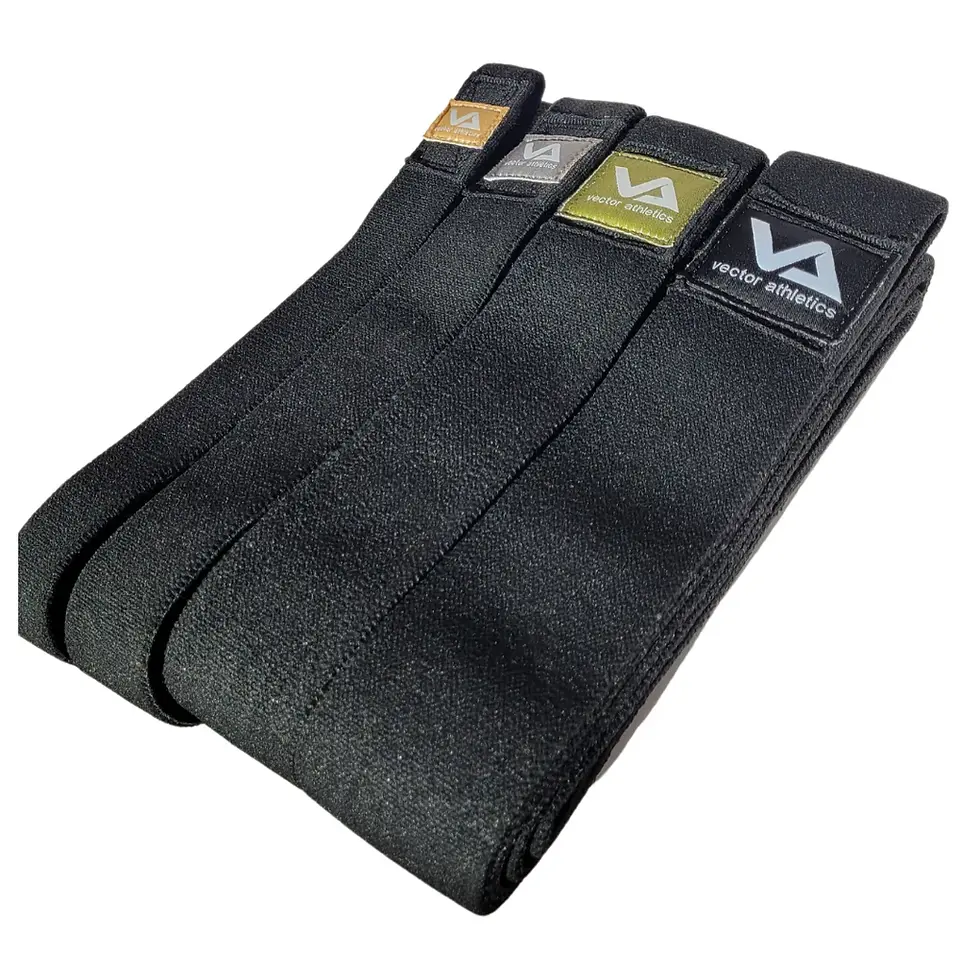
Coupon code: EMMA20 for 20% off
These silicone bands are a standout because they’re latex-free and feel very resistant to breaking.
Band style B: Mini bands (for hips, thighs, ankles)
Mini bands are excellent for strengthening the hip complex and adding lower-body functional strength work.
I recommend two styles:


The fabric ones are usually more comfortable around the thighs. The elastic ones can be useful for certain ankle-based drills (even though they may roll on the thighs).
Band style C: Flat resistance band (best for foot and ankle work)

This one is especially helpful for:
intrinsic foot strengthening
ankle complex work
targeted corrective drills
I personally don’t love these for upper body work (they can feel flimsy), but for foot/ankle training they’re worth having.
Must-have #3: Dumbbells (optional at first, but useful long-term)
If you’re brand new, you often don’t need weights immediately. The smartest approach is usually:
master movements with bodyweight
Then increase intensity by adding load
But eventually, most people benefit from having dumbbells at home.
Beginner-friendly dumbbell options

If you already feel stronger, you may prefer starting closer to a 5–15 lb range.
And yes—some clients start with milk jugs, water jugs, or soup cans. That works.
Dumbbells are simply more convenient.
If you want a bigger range without buying everything separately

Quick note on adjustable dumbbells
They’re space-saving, but not ideal for everyone. If constantly changing weights annoys you mid-workout, a basic set may suit your lifestyle better.
Optional: A wearable (only if accuracy matters)
Some people love metrics. That’s fine—as long as what you’re tracking is accurate.
But even with a wearable, I strongly recommend layering intensity with:
rate of perceived exertion (RPE)
the talk test
Especially if you’re on medications that alter heart rate response, the talk test is a reliable anchor.
Must-have #4: A calendar
This one surprises people, but it’s real.
The best home gym equipment essentials in the world won’t help if your training is random. A calendar helps you plan your week so you build consistency.
If you’re working 1:1 with a coach, your schedule is built for you. If you’re following a pre-made program or building your own routine, a calendar is one of the simplest tools you can use to stay on track.
“Why didn’t you include a treadmill, bike, or elliptical?”
Because you don’t need expensive cardio machines to improve cardiovascular fitness—especially when you’re starting from zero.
You can get your heart rate up with:
step work
dumbbell circuits
band intervals
bodyweight conditioning
And the best mode of cardio is the one you’ll actually do consistently. Some people love running outside. Some people swim. Some people hate both. Your preference matters.
Quick shopping list: my home gym equipment essentials with links
Steps
Box Steps (check sizing/height)
Resistance Band Styles
Best 41-inch loop bands (latex-free): Coupon code: EMMA20
Mini bands:
Dumbbell Sets
About the Author

Emma Mattison is the founder of Emma Mattison Fitness, where she helps adults 40+ build functional strength, improve conditioning, and support long-term health with practical training and sustainable nutrition.
She offers 1:1 online coaching and pre-made programs for functional fitness, cardiovascular training, and nutrition.

Comments