%20(2)_edited_edited_edited.png)
Best Resistance Bands for Home Workouts: Types, Safety Tips, and Latex-Free Options
- Emma Mattison

- Feb 4
- 4 min read
Best Resistance Bands for Home Workouts: Types, Safety Tips, and Latex-Free Options
Resistance bands are one of the most underrated tools in fitness.
They’re portable, affordable, joint-friendly, and—when you choose the right style—powerful enough for beginners and advanced athletes.
But before we dive in, let me make something clear:
This is not a brand review
Most of the best resistance bands for home workouts are produced by the same few manufacturers, then rebranded and sold on Amazon.
So I’m not here to sell you a “magic brand.”
I’m here to help you buy the right style so you don’t feel lost when you’re shopping—and so you don’t end up with bands that roll, snap, or irritate your skin.
Flat resistance band (therapy band): the simplest starting point
The first style is the therapy band (sometimes called a “TheraBand,” but that’s technically a brand name).
These bands are:
flat and wide
not looped
great for foot/ankle work and lighter corrective exercise
easy to anchor in a door if you tie a knot (but you need to watch wear and tear)
Recommended flat band

Latex allergy note
Many flat therapy bands are made with latex because it’s cheaper to manufacture. If you have a latex allergy, look for non-latex / TPE (thermoplastic elastomer) options.
Latex-free flat band option

Loop bands (mini bands): the ones that roll vs the ones that don’t
Loop bands (often called “mini bands”) are fantastic for:
hip, knee, and ankle stability work
glute activation
corrective exercises
warm-ups and travel workouts
But there are two main styles, and one of them drives me insane.
The rubber mini bands (the rolling problem)
These are the small rubber loops that go around the thighs.
They’re fine in theory… but in real life, they often:
roll
curl
bite into your legs
distract you from the actual workout
If you’re a beginner, the lighter tensions may feel manageable—but comfort matters if you want consistency.
The fabric loop bands (my preferred option)
Fabric loop bands are wider, more comfortable, and they don’t roll the same way.
This is the set style I recommend most often for clients because they’re:
comfortable
stable
easy to use for lower body work
available in multiple tension levels
Recommended fabric loop bands

Latex-free loop band option (TPE)

Tubing bands: useful, but choose the safer style
Tubing bands can be useful—especially for upper body movements and cable-style exercises.
But there are two versions:
Standard tubing
This style is more “flimsy,” and I personally worry more about snapping over time (especially with older bands or bands stored poorly).
If you use tubing bands, you’ll want a proper anchor.
Door anchor (simple option)

Door anchor strap (with metal loops)

Safer tubing: fabric-covered “scrunchy” style
This is my preferred tubing option because the fabric sleeve helps protect you if the internal tubing fails.
Recommended fabric-covered tubing kit

Pull-up assistance resistance bands: best resistance bands for home workouts, my top recommendation
This is the best resistance bands for home workouts. I consider this band style the most versatile and most useful for a full home training setup.
They’re thick, long, and made as a giant loop—so you can wrap them around:
a weight rack
a sturdy railing
a heavy post
a tree (yes, a tree works if it’s solid)
They’re excellent for:
upper body pulling and pressing variations
corrective exercise
assisted pull-ups
full-body strength training
My favorite latex-free pull-up band option
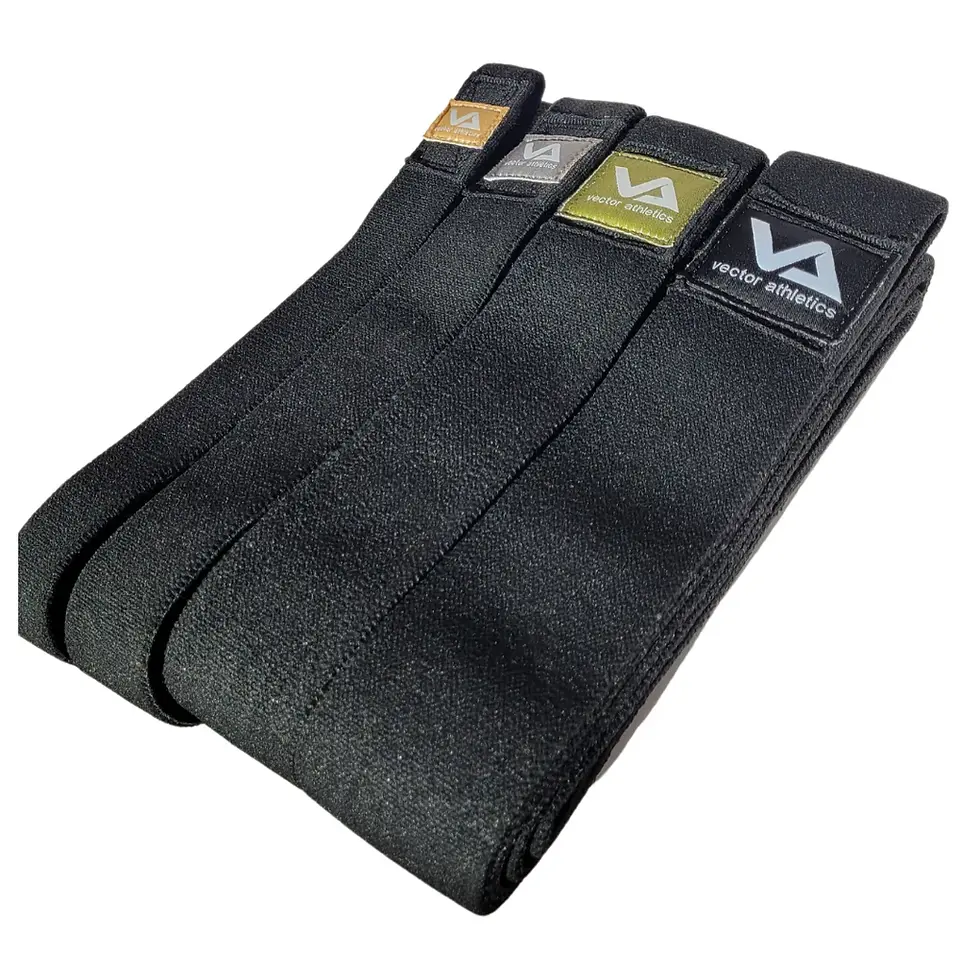
Use code: EMMA20 (20% off)
Amazon pull-up band option (the ones I share in the video)

What resistance bands should you actually buy first?
If you want the simplest “starter kit” that covers most needs:
My recommended band arsenal
Pull-up assistance bands (most versatile)
Fabric loop bands (best lower-body comfort + stability work)
Flat therapy band (optional—especially for foot/ankle work)
Resistance band safety: the most important rules
This matters more than the brand, the color, or the price.
1) Don’t overstretch your band
A common guideline from manufacturer safety instructions is:
Do not stretch a resistance band more than 2× its resting length.
If you feel like you could crank out reps forever, don’t just stretch it farther and farther. Instead:
increase band thickness/tension, or
adjust your position slightly to increase tension without extreme stretching
2) Inspect your bands regularly
If your bands are fraying, cracking, or feel dry/brittle, replace them.
And if you’ve had bands stored away for years, don’t assume they’re safe just because they “look fine.”
3) Store them correctly (avoid dry rot)
Avoid leaving bands in:
direct sunlight
hot cars
garages with extreme heat swings
Heat and light can break down rubber and many plastics over time.
How to clean resistance bands
If you sweat on them (and you should), clean them.
A simple method used in product cleaning guidance is:
mild soap + warm water
wipe down
air dry
avoid harsh chemicals and avoid sun storage
Latex-free resistance bands: what to look for
If you have a latex allergy, your safest strategy is to look for:
TPE (thermoplastic elastomer) for flat and loop bands
fabric loop bands
silicone pull-up bands (like the Vector Athletics option linked above)
Key takeaways
Resistance bands are not about brands—they’re about styles.
For most people, the best setup is:
pull-up assistance bands
fabric loop bands
optional flat bands for foot/ankle work
If you have a latex allergy, look for TPE, fabric, or silicone options.
For safety, don’t stretch bands beyond ~2× resting length, inspect wear, and replace older bands.
Clean with mild soap + water and store away from sunlight/heat.
About the Author

Emma Mattison is the founder of Emma Mattison Fitness, where she helps adults 40+ build functional strength, improve conditioning, and support long-term health with science-backed training and sustainable nutrition. She offers 1:1 online coaching and pre-made programs designed to help you train with clarity, confidence, and consistency.
References
Example latex-free resistance bands made with TPE (thermoplastic elastomer) (product material descriptions).
Manufacturer safety guidance example: do not stretch bands more than 2× resting length.
TheraBand non-latex care guidance: mild soap + warm water, air dry.
General home gym cleaning guidance including resistance bands: wash in soapy water, avoid sunlight.


Comments