%20(2)_edited_edited_edited.png)
Myndlift Review 2026: Brain Snapshots, Muse S Athena, and At-Home Neurofeedback Explained
- Emma Mattison

- May 11
- 9 min read
Myndlift Review 2026: Brain Snapshots, Muse S Athena, and At-Home Neurofeedback Explained
If you are curious about Myndlift, or you have used Muse before and are wondering what has changed with at-home neurofeedback in 2026, this review is for you.
Myndlift has added features that make brain training feel more practical for real life, especially its brain snapshots feature. And if you are using the Muse S Athena, there is even more to talk about now, thanks to its combined EEG and fNIRS capabilities.
As usual, I am not approaching this from a purely theoretical place. My husband and I have used Myndlift ourselves, including working with one of their neuro coaches, so I want to explain what these updates actually mean in plain English, where I think the platform is useful, and where I think people need to stay realistic.
Before we go any further, a quick but necessary disclaimer: this is not medical advice, this is not a diagnosis, and this is not a replacement for working with a qualified clinician when needed. Brain snapshots are also not the same thing as a full qEEG assessment. They are better understood as an accessible at-home complement, not a total substitute for a full clinical workup.
Exclusive discount code: EMMA60
Use code: EMMAMATTISON

Myndlift Review 2026: What Is Myndlift?
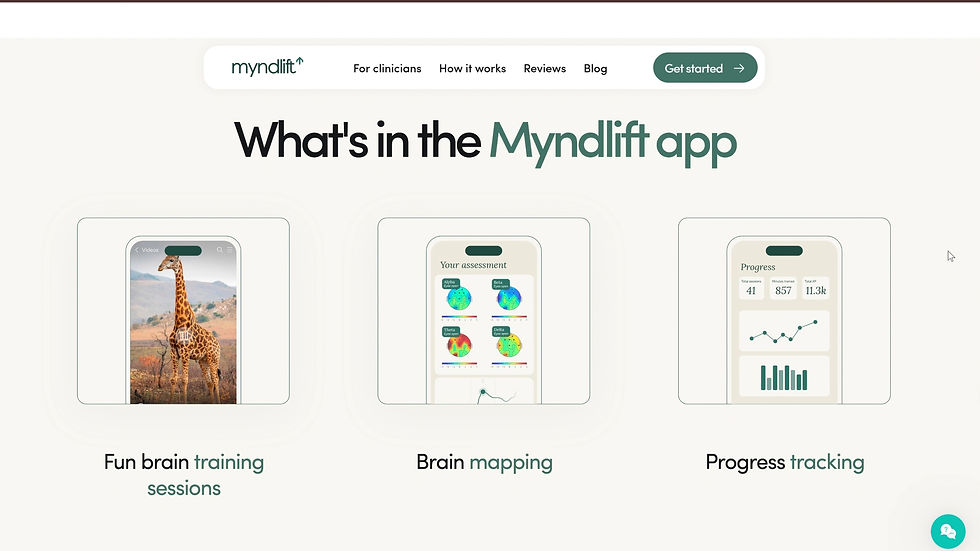
Myndlift is an at-home neurofeedback platform that uses EEG-based brain sensing to support brain training, assessments, insights, and remote neurofeedback. Myndlift describes its system as combining EEG sensing, brain maps, assessments, and remote neurofeedback training, with the option for human support depending on the plan or setup.
The simplest way to think about it is this: Muse is the physical brain-sensing device, while Myndlift is a more structured neurofeedback training platform that can use Muse as the reading device.

Muse by itself can be a great fit if you want meditation, sleep support, relaxation tools, and general brain fitness. Myndlift becomes a different category if you want more detailed data, personalized protocols, cognitive tracking, coaching support, and a system that is more specifically built around neurofeedback training.
That distinction matters because a lot of people get confused and ask, “Why wouldn’t I just buy Muse and stop there?” And honestly, for some people, Muse may be enough. But if you want more guidance and more specific protocols, Myndlift gives you a fuller training environment.
Myndlift Brain Snapshots: The Biggest 2026 Update
One of the biggest consumer-facing updates, in my opinion, is Myndlift’s brain snapshot feature. In the video, I explain these as short EEG-based scans you can do in the app to get a quick visual summary of your brain activity, without feeling like you are staring at raw brain data and trying to decode it yourself.

That is important because one of the biggest barriers with brain training tools is not just whether the technology is interesting. It is whether people can actually use it consistently.
The brain snapshot feature makes the data more approachable. Instead of only thinking, “Here are my brain numbers,” you can start asking more useful questions:
What does my brain look like after poor sleep?
What does it look like after coffee?
What happens after a workout?
Does journaling before bed seem to change anything?
What does my brain look like after a stressful day?

That is where this type of tool can become more practical. It moves the data away from being a scary number and turns it into a pattern-tracking tool.
Myndlift Brain Snapshot Metrics Explained in Plain English
Myndlift’s brain snapshots include several metrics that can sound like complete jargon at first. The main ones I discussed in the video are fatigue, mental load, engagement, alpha peak, alpha response, and beta balance.
Here is the plain-English version.
Fatigue is basically asking: does my brain look more sluggish or more alert right now?
This does not mean you should panic over one reading, but if the number trends higher, it may line up with feeling mentally drained, tired, or sleepy.
Mental load is about cognitive effort. A higher mental load is not automatically bad.
Sometimes you are concentrating hard and that is appropriate. But if it always feels elevated, it may reflect a brain that is constantly working too hard or overthinking.
Engagement is one of the more intuitive metrics. It is basically asking: am I more dialed in, or am I drifting and easily distracted?
Alpha peak is more technical. Myndlift explains alpha peak as a marker related to the strongest point in your alpha frequency range, and in practical terms, it is often discussed in relation to information processing and cognitive efficiency. But this is also where I want people to be careful. Do not obsess over one metric. Alpha peak can be interesting, but it is not the whole story.
Alpha response looks at how your brain shifts when you close your eyes. To me, this is one of the more interesting concepts because not everyone is good at downshifting. A stronger alpha response may reflect better adaptability and an easier ability to disengage from outside stimulation.
Beta balance is helpful if you tend toward tension, worry, or overactivity. In simplified terms, it asks: does my alertness look calm and productive, or am I more revved up and edgy?
The key is not to treat every number like a dramatic personal diagnosis. The key is to watch trends and use the data to make better decisions.
At-Home Neurofeedback: Why Ease of Use Matters
One thing I like about the brain snapshot feature is that it lowers the barrier to actually using the tool consistently.
Some neurofeedback protocols are more involved. They may require an extra electrode, paste, a snug headband, minimal blinking, a relaxed face, and a very still setup. That can be useful and important for certain protocols, especially if you are working with a neuro coach. But realistically, it is also harder to turn into an everyday habit.
My husband did not love the extra step of using the electrode and paste, especially when it involved putting it in his hair and then cleaning everything afterward. That does not mean the setup is bad. It means behavior matters. A tool can be scientifically interesting and still fail in real life if it feels too inconvenient to use.
That is why shorter, simpler snapshots may help people ease into the habit before moving into more advanced training.
Muse vs Myndlift: What Is the Difference?
This is one of the most important distinctions to understand.
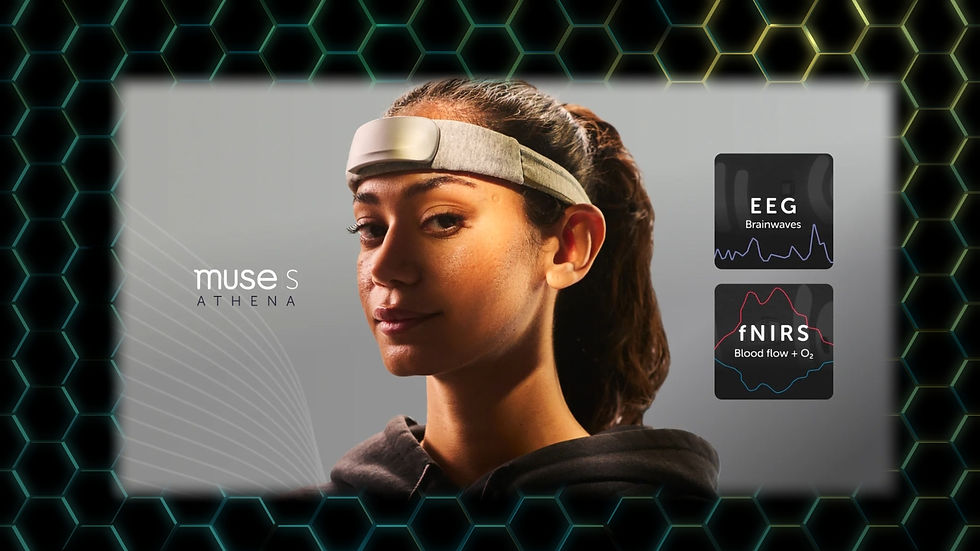
Muse is the physical headband. It is the device that reads brain activity. Muse also has its own app experience, including meditation, sleep, biofeedback, and brain fitness features. Muse describes its devices as using EEG-powered real-time neurofeedback, and the Muse S Athena adds fNIRS tracking for blood oxygenation and cognitive effort.

Myndlift, on the other hand, is more of a designated neurofeedback coaching and training platform. It can use Muse as the reading device, but it adds more structure through assessments, protocols, app-based training, messaging, and, depending on the plan, access to a neuro coach.
So here is my honest breakdown.
If you want a simpler meditation-oriented or sleep-support device, Muse may be enough.
If you want more detailed brain data, more specific training protocols, a structured neurofeedback platform, and the option to work with a real human coach, Myndlift makes more sense.
Muse S Athena Review: Why EEG and fNIRS Matter
The Muse S Athena is where this conversation gets more interesting. Muse describes the Muse S Athena as a device that combines EEG and fNIRS technology, with EEG sensors for brain activity and fNIRS for blood oxygenation and flow in the brain.
EEG and fNIRS are not measuring the same thing.

EEG measures electrical brain activity.
fNIRS, or functional near-infrared spectroscopy, gives information related to blood flow and oxygenation, especially in the prefrontal cortex. In research settings, fNIRS is commonly discussed in relation to hemodynamic responses, meaning changes in blood flow and oxygen levels that occur with neural activity.
A simplified way to think about it is this:
EEG tells you something about how the brain is firing.
fNIRS gives you a window into whether the system appears to have the oxygenation support to sustain that effort.
Myndlift’s own 2026 update explains this in a similar way, stating that EEG shows how the brain is firing, while fNIRS shows whether the brain has the oxygen to sustain that activity. Myndlift also says it plans to support simultaneous EEG and fNIRS training in 2026.
That matters because “brain activity” and “brain resources” are not the same thing. You may be pushing hard mentally, but that does not always mean your system is sustaining that effort efficiently. That is one reason tools that combine EEG and fNIRS may eventually give users a richer picture than EEG alone.
EEG and fNIRS Brain Training: Helpful Data, Not Magic
This is where I want to be very clear. I think these tools are interesting. I think they can be useful. But I do not want people treating at-home brain data like it explains every problem in their life.
Helpful data is still just data.
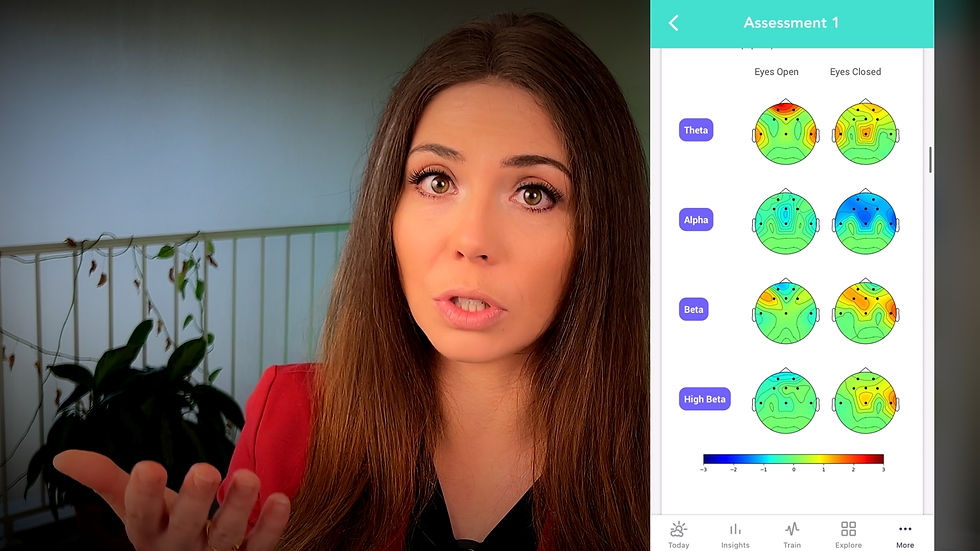
It can show patterns. It can help you ask better questions. It can help you compare how your brain looks after sleep, stress, caffeine, meditation, exercise, or journaling. But it should not become something you use to micromanage every tiny fluctuation in how you feel.
The body is cyclical. Your brain is not going to look exactly the same every day. That is normal.
The goal should be to use data intelligently, not emotionally.
Myndlift Coaching vs Self-Guided Plan: Which Is Better?
I also want to talk about the coaching side because this is where I have seen people get confused.
Based on my own experience, I think starting with coaching can be worth it if you are brand new to neurofeedback. Neurofeedback can be really cool, but it can also feel intimidating when you do not know what you are looking at.
Having a real person help interpret things, guide your setup, adjust protocols, and keep you from second-guessing every little detail can be genuinely helpful.
Then, once you understand the system better and you know you are the kind of person who can stay consistent on your own, a lower-cost self-guided option may make more sense. In the video, I mention that when we tried to cancel a coaching plan, we found there was an option to move to a lower-cost plan without coaching, around $29 per month at the time of recording. Since pricing and plan structures can change, I would always check Myndlift directly before making a decision.
My practical recommendation is this:
If you are new, start with support.
Once you understand the system, earn your way into self-reliance if that fits your personality.
Who Is Myndlift Best For?
Myndlift is best for people who like objective feedback and are willing to track patterns.
If you already journal, track workouts, notice sleep patterns, experiment with routines, or enjoy seeing whether your habits are helping or hurting, this type of tool may be incredibly useful.
It may be especially interesting if you want to ask questions like:

Does my brain look more fatigued after
poor sleep?
Does journaling before bed change anything?
What happens after a hard workout?
What happens after a lot of caffeine?
What does my brain look like after meditation?
That is where Myndlift can become practical. It gives you a way to stop guessing and start observing patterns.
But if data makes you anxious, or if you know you tend to obsess over numbers, you need to be careful. More data is not always better if it makes you less grounded.
Is Myndlift Worth It in 2026?
Overall, I think Myndlift has become more compelling in 2026, especially because of the brain snapshot feature and the added possibilities with Muse S Athena.
If you want something that goes beyond basic Muse use, gives you more detailed data, lets you track your brain around real-life habits, and gives you the option to work with an actual human coach, Myndlift is worth a look.
I would not frame it as a miracle tool. I would frame it as a brain training and pattern-tracking platform that may be useful for people who want more structure, more feedback, and more guidance than a standard meditation app or wearable experience.

Exclusive discount code: EMMA60
Use code: EMMAMATTISON
If you use either of my links, it does not cost you anything extra, and it helps support the channel. As always, I only share tools here that I actually think are interesting and useful in real life, not just theoretically.
Final Thoughts on Myndlift, Muse S Athena, and Brain Training
Myndlift is not a replacement for medical care. Brain snapshots are not a full clinical brain assessment. And no device can tell you everything about your brain, your habits, or your health.
But as an at-home tool for noticing patterns, supporting consistency, and making neurofeedback more approachable, I do think Myndlift has become more useful.
The big takeaway is this: use the data to support better habits, not to obsess over every number.
Brain training should help you become more aware, more grounded, and more consistent. It should not become one more thing to stress about.
About the Author

Emma Mattison is a NASM Certified Personal Trainer, Nutrition Coach, and Functional Aging Specialist. She is the founder of Emma Mattison Fitness, where she helps adults 40+ build functional strength, improve mobility, support long-term health, and make sense of wellness tools without falling for hype. Emma’s approach blends science-backed fitness, holistic health, and real-world practicality so people can make better decisions for their bodies, brains, and lifestyles.
References
Myndlift. “Better Brain With Therapist-Guided Home Neurofeedback.”
Myndlift. “2026 Is a Big Year for At-Home Neurofeedback.”
Muse. “Muse S Athena.”
Muse. “Muse EEG Mental Fitness & Sleep Headband.”
Apple App Store. “Myndlift.”
Zeng, L., et al. “Prefrontal fNIRS-decoded neurofeedback training.”
Barth, B., et al. “Near-Infrared Spectroscopy Based Neurofeedback of Frontal Cortical Areas.” Frontiers in Human Neuroscience.
Comments