%20(2)_edited_edited_edited.png)
Best Adjustable Kettlebell: Basic vs Competition Style (Plus What I’d Buy and Why)
- Emma Mattison

- Feb 5
- 4 min read
Updated: Apr 8
Best Adjustable Kettlebell: Basic vs Competition Style (Plus What I’d Buy and Why)
The question you’re all here for: can an adjustable kettlebell be a practical and cost-effective solution?
Yes, but it depends on the style and on what you actually want to do with kettlebell training.
I’ve used two main adjustable kettlebell styles extensively, and in this article, I’m going to break down:
What’s great about each one,
What’s annoying about each one,
and which type is most likely to fit your needs.
This is not a brand worship article. Most of these products are rebranded versions of similar designs. I care less about the logo and more about how it performs in your hands, in your workout flow, and on your budget.
Basic best adjustable kettlebell style
This is the classic “basic adjustable kettlebell” design—if it looks like this style, it’s generally the same concept across many listings.

Pros
1) Easiest plate changes (once you learn the toggle). This style is the simplest for switching weights mid-workout. The top toggle can be finicky at first, and it may take a bit of strength initially, but once you get the hang of it, it’s fast.
2) Usually, the best price point. This is commonly the most affordable way to get an adjustable kettlebell with a decent weight range.
3) Flexible weight range. These often go from very light to moderately heavy (depending on the model). That flexibility can be useful if you’re doing different movements or working multiple training outcomes.
Cons
1) The handle shape and width can be awkward. The handle is often wider than that of competition-style kettlebells, and for smaller people, this can make double-handed swings feel cramped as they pass through the legs.
2) Rack position discomfort (and forearm issues). This is a big one. When you rotate into the rack position, the shape and edges can dig into the forearm. That’s why I recommend adding some cushion if you’re using this style regularly.

You can DIY this with socks if you want. The point is protection—especially if the design bites into your forearm.
3) “Flow disruption” is still a thing. Even though plate changes are easier than other adjustable styles, you still have to stop and change plates. Some people keep plowing through and compromise form instead of adjusting the load. Don’t do that.
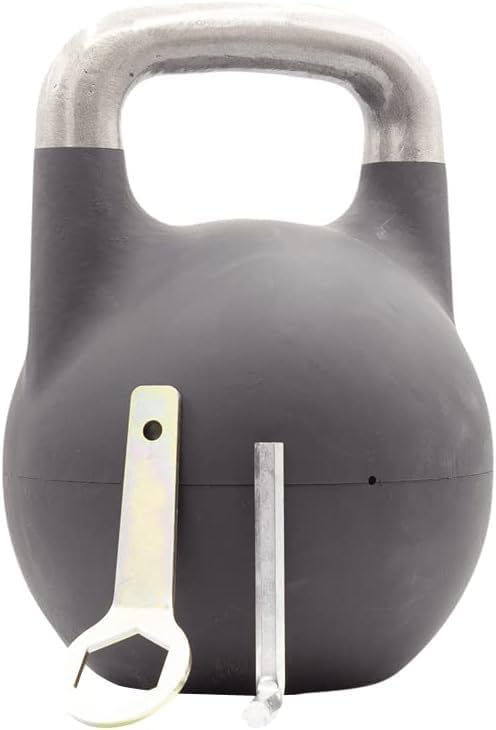
Competition-style best adjustable kettlebell
Competition-style kettlebells have a more standardized feel in the hand, and the overall structure tends to feel more “true kettlebell.”
Pros
1) Better feel in the hand and on the wrist. The handle is typically thicker and more upright. The kettlebell “sits” better in the rack position, and overall movement mechanics feel cleaner.
Even with this style, I still recommend wrist guards.
2) The shape stays consistent. Competition-style kettlebells keep the same general shape regardless of weight. That matters if you care about technique consistency.
3) Easier to pass between the legs (especially compared to wide-handle basics). This style tends to pivot better in the hand and feels smoother for swings—especially single-handed swings.
Cons
1) Plate changes are a pain. This is the dealbreaker for some people. Changing plates in this style can be disruptive enough that people end up using only 1–2 weights instead of adjusting properly throughout a session.
2) The empty shell can still be heavy. If you’re a true beginner, the “starting weight” can feel heavy even before you load additional plates.
3) Cost can be steep. Depending on the listing and availability, this style can be significantly more expensive than the basic design.
Grip, sweat, and safety
If you’re doing a lot of kettlebell swings, cleans, or longer sessions, grip becomes a safety issue.
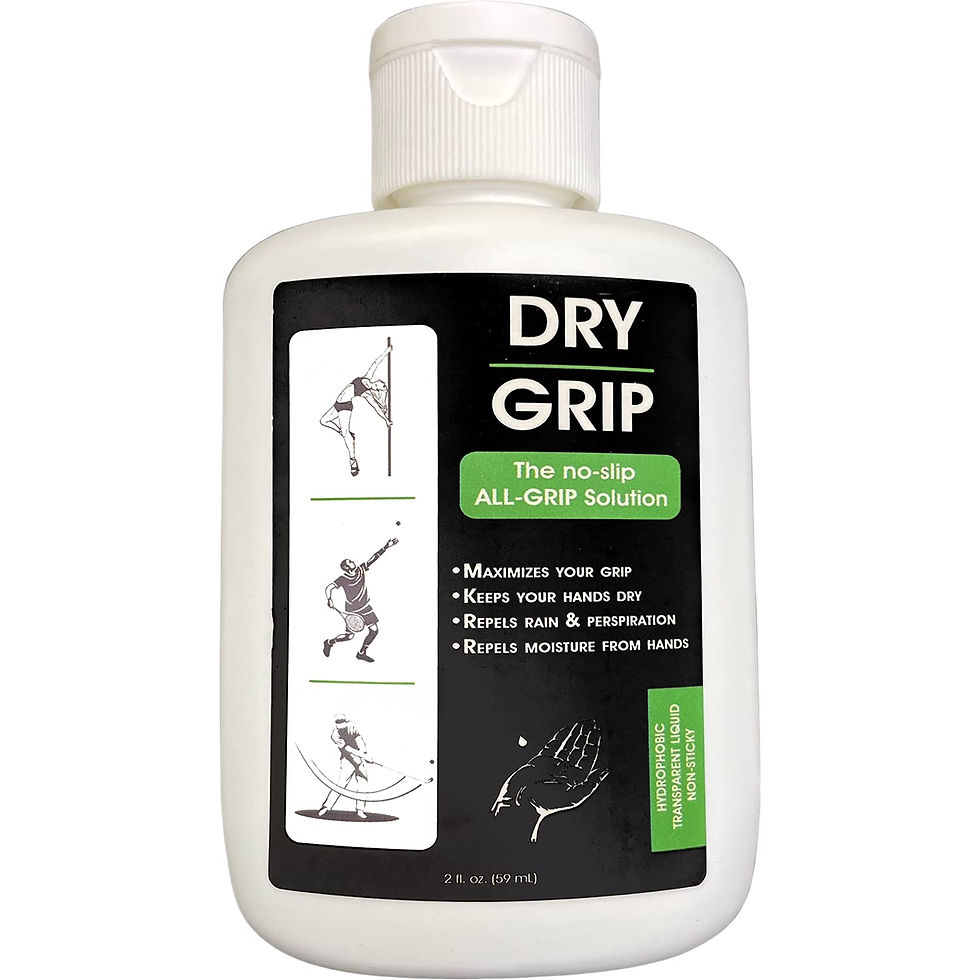
Use a small amount. The goal is control—not turning your hands into a chalk explosion.
Honorable mention
This option sits between the two styles: easier adjustments than competition style, closer shape than the basic style, but still not true competition dimensions.
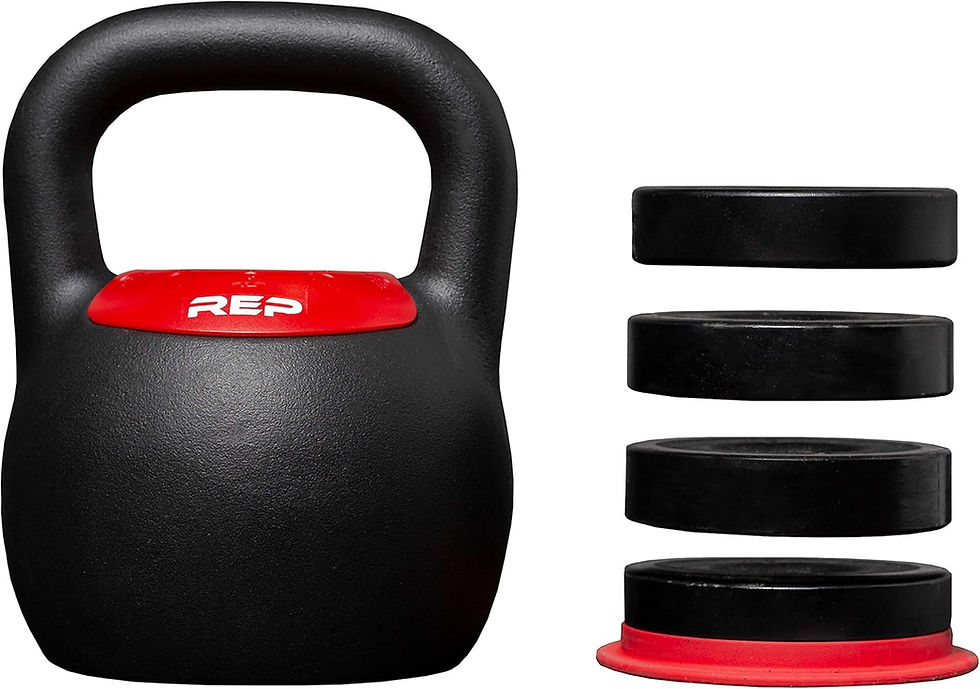
A community member reported issues with weight plate security—so if you go this route, be diligent about checking stability before ballistic movements like swings.
What weight should you start with? (general guideline)
These are general starting points—not laws. Your training history, body size, mobility, and skill with the kettlebell pattern matter.
Beginner men: ~35 lb (16 kg) Beginner women: ~18 lb (8 kg)
Intermediate men: ~44 lb (20 kg) Intermediate women: ~26 lb (12 kg)
Advanced men: ~53 lb (24 kg) Advanced women: ~35 lb (16 kg)
One thing I’ll stress: kettlebell training relies on momentum and mass. If you’re using extremely light weights because the movement feels awkward, it may be smarter to regress the movement pattern (or use a dumbbell version) until your form is solid.
My final take
If you want the simplest adjustable option that’s easier to change mid-workout, the best adjustable kettlebell is usually the most practical.
If you care about the true kettlebell feel (especially technique consistency and comfort), and you’re okay with slower plate changes, the competition-adjustable kettlebell offers a better training experience.
Either way, the right choice comes down to:
your training goals,
your budget,
your body mechanics,
and whether you want a “one kettlebell solution” or a more competition-style feel.
Recommended products (links)
🤔 Rep Fitness Adjustable Kettlebell (use with caution):
About the Author

Emma Mattison is the founder of Emma Mattison Fitness, where she helps adults 40+ build functional strength, improve conditioning, and support long-term health with training that’s practical, progressive, and sustainable. She offers 1:1 online coaching, plus pre-made programs for strength, cardio, and nutrition.


Comments